
Our Island, Our World
IN THIS LESSON
LEARNING THROUGH LOCAL HERITAGE
Jersey Stories helps children discover the island through folklore, local history, language and shared memories.
Every story reveals something about how islanders lived, what they feared, what they celebrated, and what they hoped for.
From mysterious black dogs to ancient dolmens and Jèrriais greetings, pupils explore Jersey as a place shaped by land, sea, imagination, and community.
What children will learn:
Understand Jersey’s Intangible Heritage
Explore Why Folklore Thrives on Islands
Discover Jersey Legends
Connect Past & Present Through History
Celebrate Jersey Language: Jèrriais
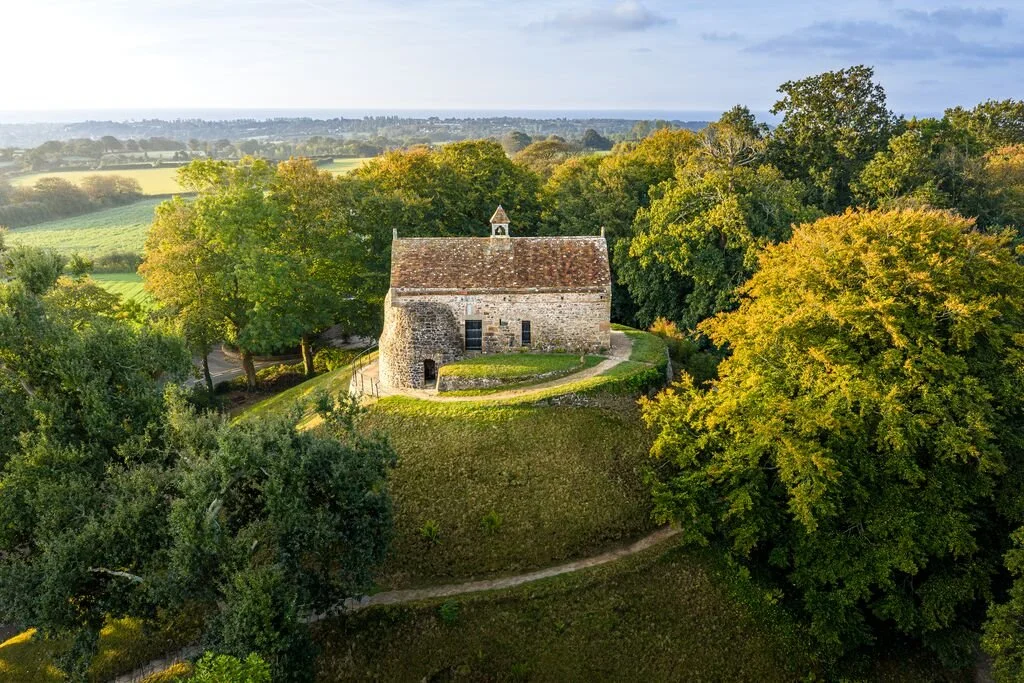
Photo credit: Visit Jersey
Lesson Presentation
How to use the one-deck model (all year groups)
Slide menu (for teacher planning):
Slides 1–3: What is folklore? (core concepts + vocabulary)
Slides 4–7: Black Dog of Bouley Bay (place-based legend + questions)
Slides 8–10: Bull of St Clement (legend + questions)
Slides 11–13: Why stories exist + Jèrriais identity (culture/language link)
Slides 14–30: Jersey through time (Neolithic → Modern)
Pedagogy reminder (Learn.je): Place-based learning + storytelling + cultural heritage + enquiry + interdisciplinary links → always end with a “community/identity” action.
YEAR 1 Teacher Notes
Slide focus (recommended): 1–7 (+ optional 11–13)
-
Starter questions (choose one):
“What places in Jersey do you know?”
“Which Jersey place feels special to you — and why?”
Teacher framing (20 seconds):
“Today we’ll listen to a Jersey story linked to a real place. We’ll notice clues and think about what it might mean.”
-
Prompt (simple noticing):
“What do you notice in the picture?”
“How do you think the person feels in this moment?”
“What might this story be warning people about?”
Support: give children sentence stems:
“I notice…” “I think…” “Maybe…”
-
Spot the Place (Map Match)
Children match Bouley Bay photo to a simple Jersey map (teacher points; children circle).Freeze-Frame Drama
In pairs: act out “curious / worried / brave” moments from the story.Past/Now Sort (Very simple)
Teacher shows 2–4 images (old stones/castle vs modern street). Pupils sort “then / now”.
History Curriculum Alignment
☐ Awareness of the past + time words
☐ Ask/answer questions using stories/images
☐ Local people/places/events (locality focus)
☐ Ways the past is represented (story vs photo)
YEAR 2 Teacher Notes
Slide focus (recommended): 1–10 + 11–13
-
Starter questions:
“Who tells stories in your family?”
“Do stories always have to be true to be important?”
Teacher framing:
“We’re going to investigate what stories can teach us about Jersey — and how they shape behaviour.”
-
Prompt (meaning-making):
“What lesson does this story teach?”
“Is the story trying to protect someone or warn them?”
“What clues tell you the setting is Jersey?”
Mini-enquiry:
“What is evidence in this lesson — picture, place name, poem, language?”
-
Story Evidence Hunt
Children highlight (or teacher circles) “Jersey clues”: place name, coastline, Jèrriais, local references.Changes within Living Memory (local link)
“Ask a parent/grandparent: what Jersey place has changed since they were young?”
Draw “then/now”.Create a Class Folklore Poster
Title: “Jersey Stories teach us…” with 3 rules (e.g., be careful near cliffs).
History Curriculum Alignment
☐ Changes within living memory (local change)
☐ Local significant people/places/events
☐ Use stories/sources to answer questions
☐ Different representations of the past
YEAR 3 Teacher Notes
Slide focus (recommended): 1–3 + choose 1 legend (4–7 or 8–10) + 14–1
-
Starter questions:
“How do we know what happened in Jersey before writing existed?”
“What’s the difference between a story and evidence?”
Teacher framing:
“Today we compare folklore with archaeology — two ways of knowing Jersey’s past.”
-
Prompt (historical enquiry):
“What can a stone monument / burial site tell us?”
“What can’t it tell us?”
“Why might people create stories about places with danger?”
Introduce key concept:
Interpretation: “Two people can look at the same clue and make different ideas.”
-
Timeline Build (Prehistoric Jersey)
Children place cards: Neolithic → Bronze Age → Iron Age. (Add 1 fact per stage.)Evidence Table (Archaeologist’s Desk)
Stations: “object/photo/story/poem”. Pupils label each as evidence type and write what it suggests.Hoard Mystery (Iron Age coins)
Group hypothesis: “Why bury coins?” (safety, ritual, war, hiding wealth) → choose best explanation and justify.
History Curriculum Alignment
☐ Chronologically secure knowledge (local Jersey history narrative)
☐ Prehistoric Britain + Prehistoric Jersey examples (La Hougue Bie/dolmens)
☐ Historical enquiry + evidence use
☐ Historically valid questions (change/significance)
YEAR 4 Teacher Notes
Slide focus (recommended): 1 legend (4–10) + 14–22
-
Starter questions:
“Why did Jersey build strong castles?”
“How can religion change everyday life?”
Teacher framing:
“We’re exploring cause & consequence: threats, power, belief — and how they shape places. Then we ask: how should communities reuse and protect historic places today?”
-
Prompt (cause/consequence + interpretation):
“What changed when Jersey became more defended/fortified?”
“What might people have feared?”
“How might different groups tell this history differently (church leaders vs ordinary families)?”
-
Castle Purpose Puzzle
Give 4 castle “jobs”: defence, control, warning, identity. Groups match jobs to features (towers, walls, location).Beliefs & Behaviour (Reformation enquiry)
Make a two-column chart: “Before / After” with daily life examples (church services, rules, community gatherings).
(Keep it age-appropriate and non-sectarian.)Heritage & Community Link
Local walk/photo: find a building that looks “old”; discuss how it’s used now.
History Curriculum Alignment
☐ Local Jersey narrative across periods
☐ Use historical terms + connections/contrasts
☐ Cause & consequence / significance questions
☐ Interpretations: how the past is constructed from sources
YEAR 5 Teacher Notes
Slide focus (recommended): 14–24 (plus optional legend 4–10 as a “place hook”)
-
Starter questions:
“Why would islanders become sailors, traders, or privateers?”
“How does geography shape a community’s jobs and wealth?”
Teacher framing:
“We’re investigating how Jersey’s position created opportunities — and conflicts.”
-
Prompt (economy + risk + ethics):
“Who benefited from trade/privateering — and who didn’t?”
“What risks did sailors face?”
“Is privateering the same as piracy? What makes it ‘legal’?”
-
Trade Route Map (Geography + history)
Groups draw a simple route map (Jersey ↔ England/France ↔ Atlantic) and label goods (fish/cod, farm produce, supplies).Privateer Decision Game (Ethics + maths)
Give each group a scenario card: invest money / risk / possible reward.
They decide: invest/not invest + justify (risk management).Corn Riots: Protest & Change
Role cards: baker, farmer, town family, official.
Question: “What would be ‘fair’?” → write a simple “new rule”.
History Curriculum Alignment
☐ Chronology beyond 1066 themes (maritime history/local studies)
☐ Historically valid questions about change/cause/significance
☐ Construct informed responses from selected info
☐ Knowledge constructed from sources (maps, paintings, records)
YEAR 6 Teacher Notes
Slide focus (recommended): 14–30 + optional 11–13 for identity/language lens
-
Starter questions:
“What makes an event a turning point for a whole community?”
“How should we remember difficult history responsibly?”
Teacher framing:
“We’re using evidence + interpretation to understand Jersey’s modern identity.”
-
“Whose voices should be included in deciding a building’s future?”
“How do we balance heritage, youth needs, and community wellbeing?”
-
Source Reliability Ladder
Give 4–5 source types: photo, diary, poster, oral story, textbook.
Groups rank: “most useful / most limited” and explain why.Occupation/Liberation Then– Now
Make a comparison grid: “rules, food, freedom, schooling, feelings” then vs now.
End with: “What should we protect today?”Modern Jersey Debate (change over time)
Prompt: “Which change shaped Jersey most: farming → tourism → finance?”
Groups present a 1-minute argument using evidence.
History Curriculum Alignment
☐ Chronology + narratives across periods
☐ Cause & consequence / significance (turning points)
☐ Interpretation + evidence-based claims
☐ Knowledge constructed from a range of sources

Share Your Work
For Children
You’ve explored Jersey’s legends, places, and history — now it’s your turn to become a Jersey Story Keeper!
Choose one (or more!) to create:
Story Place Map – Draw a simple map of a Jersey place from the stories (or one you know). Add labels and 3 “clues” that show what makes it special.
Legend Re-Tell – Create a short comic strip, mini play, or storyboard retelling the Black Dog of Bouley Bay or the Bull of St Clement.
Jersey Through Time Timeline – Make a 6-step timeline (Prehistory → Iron Age → Medieval → Seafaring → Liberation → Today) with one picture or symbol for each.
Sound of Jersey – Record a 30-second “Jersey soundscape” (waves, wind, footsteps, town sounds) and explain what place it represents.
Community Memory Moment – Ask an adult: “What Jersey tradition or day is important to you?” Write or draw their answer.
For Parents & Teachers
All submissions must be uploaded with parent or teacher permission.
✅ Work will only be shared if permission is given.
✅ Submissions may be displayed on the Learn.je website or at Learn.je community events (including future Jersey celebrations).
✅ Individual or class projects are welcome.
Suggested upload formats: photo, short video (under 1 minute), scanned worksheet, audio clip, or a class collage.